A gift bag has exactly one structural job: to survive being filled, lifted, and carried without giving out. When one fails, it almost always fails in the same few places — a handle pulls free, the base splits, or the top edge tears where fingers dug in. None of that is bad luck. It is the predictable result of a paper weight, a handle style, or a base construction that was under-specified for the load. This guide walks through where the strength actually comes from, so you can order a bag that matches what you plan to put in it rather than discovering the mismatch at the counter.
Start with paper weight
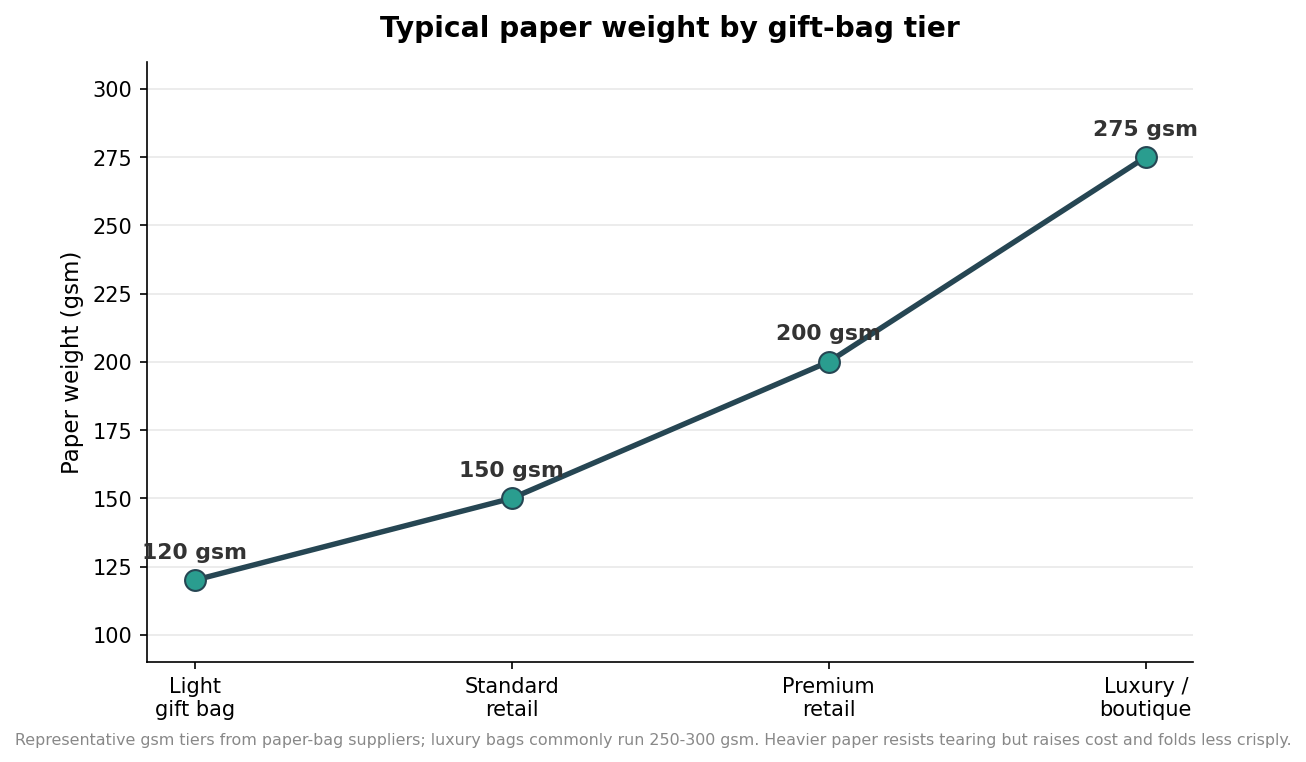
Paper weight, measured in grams per square meter, is the foundation every other strength decision sits on. As a rough map of the market, lightweight gift bags run around 120 gsm and suit small, light contents; standard retail bags sit near 150 gsm; premium retail bags step up to about 200 gsm; and luxury or boutique bags commonly land in the 250 to 300 gsm range, where the paper feels almost board-like and holds a crisp fold. Heavier paper resists tearing and keeps its shape when a bag is only partly full, which is part of why upscale brands pay for it. The trade-offs are real, though: heavier stock costs more per bag, folds less cleanly on tight gussets, and adds shipping weight across a large order. The goal is not the heaviest paper available but the lightest weight that comfortably carries your contents. Paper type matters alongside weight, too: virgin kraft is generally stronger and tears less readily than the same weight in recycled stock, so a sustainability choice can quietly cost you some strength unless you step the gsm up to compensate.
Handles carry the load, and they fail first
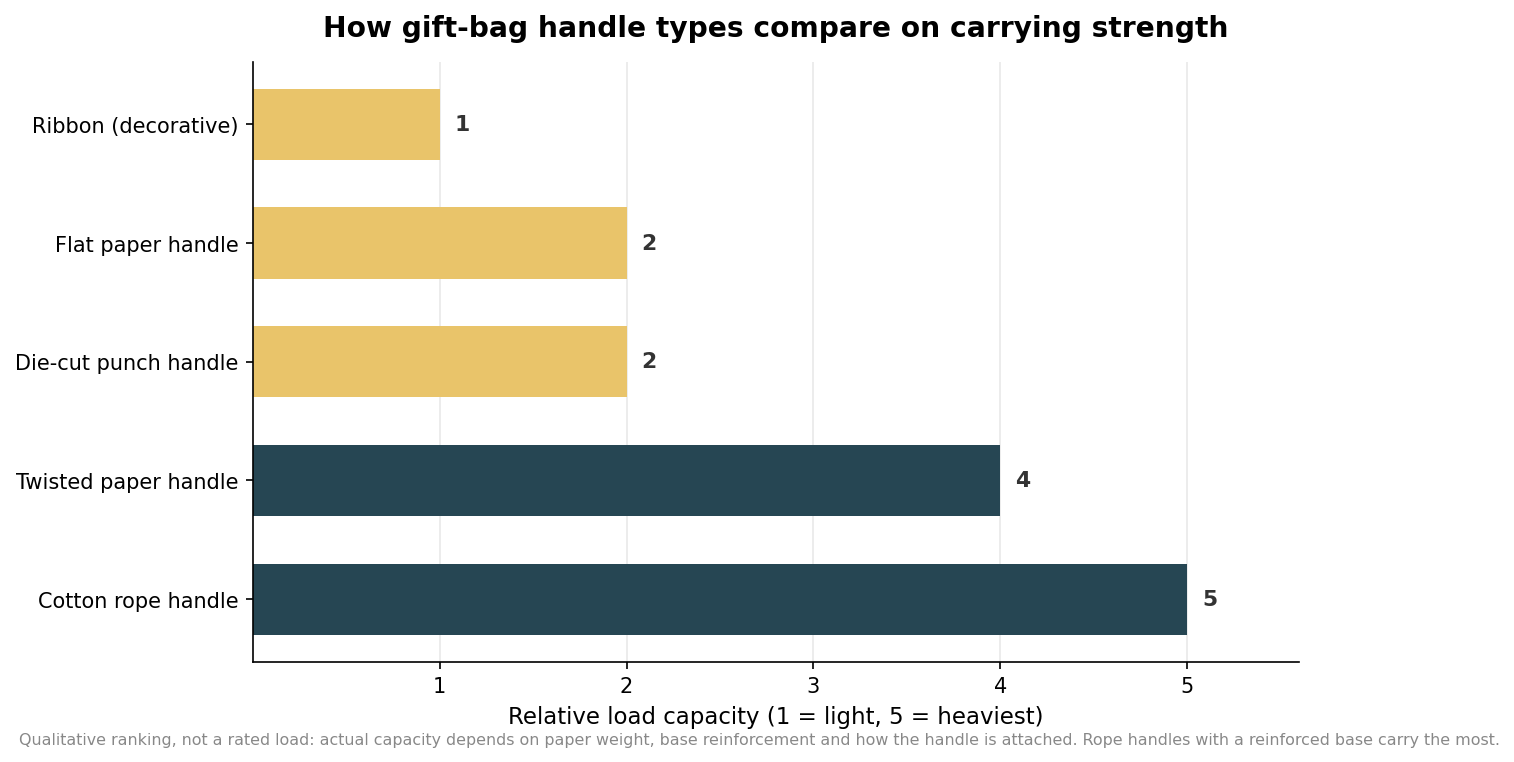
The handle is the single most common failure point, because it concentrates the entire weight of the bag onto two small attachment areas. Ribbon handles are essentially decorative and belong on light, pretty packages. Flat paper and die-cut punch handles handle modest weights and keep costs and thickness down, which is why they dominate low-cost retail. Twisted paper handles are the workhorse of general retail: machine-applied, comfortable to hold, and good for everyday loads. Cotton rope handles sit at the top for strength and for perceived value, which is why they define the luxury boutique bag — but only when they are anchored properly. How a handle is attached matters as much as its type: a rope handle knotted through the wall with a reinforcing patch behind it will outlast one simply glued to the inside face. Ask how handles are fixed, not just what they are made of. It also helps to load a bag so the weight sits low and centered rather than swinging from one side, since an off-center load puts most of the strain on a single handle anchor.
The base and the top edge do the quiet work
Two unglamorous features quietly decide whether a bag survives a heavy load. The first is the base. A plain folded bottom will bow and eventually split under weight, so bags built for anything substantial include a base insert — a stiff card dropped into the bottom that spreads the load and keeps the footprint square. The second is the top edge. A raw cut edge is where tears start; a turned-over hem, where the paper is folded back on itself and glued along the opening, roughly doubles the paper at the most-handled line and resists the finger-tearing that kills lesser bags. Glued side and bottom seams are the third quiet factor, and a wide, well-bonded seam is far less likely to peel than a narrow one. When you compare quotes, these construction details — base insert, turned top edge, seam width — explain most of the price gap between two bags that look identical flat.
Lamination changes durability, not just looks
A film lamination is usually sold as a finish, but it is also a structural and protective upgrade. A matte or gloss laminate adds a measure of tear and scuff resistance and, importantly, a degree of moisture resistance — useful if bags may sit in a damp entryway, travel in the rain, or hold anything that can sweat or weep. The trade-off is that laminated bags are harder to recycle and slower to break down than an uncoated kraft bag, so if a recycled or compostable story matters to your brand, weigh that against the durability gain. For many buyers the honest answer is to laminate only the lines that need it and leave everyday bags uncoated.
Match the bag to what goes in it
Strength is only ever relative to the contents, so specify from the load backward. Small, dense, heavy items — a stack of candles, a bottle, hardware — punish handles and bases, so they call for heavier paper, a base insert, and rope or well-anchored twisted handles. Large but light contents — apparel, soft goods — are forgiving on weight but need enough bag size and stiffness that they don’t slump. Sharp or cornered items want a rigid bag or interior protection so a corner doesn’t punch through the wall. And anything damp, greasy, or refrigerated points toward a laminate or a poly-lined option. Decide the heaviest, most awkward thing the bag will ever carry, spec for that, and the everyday cases take care of themselves. A bag that costs a few cents more but never fails in a customer’s hand is the cheaper bag in the end.
Leave a Reply